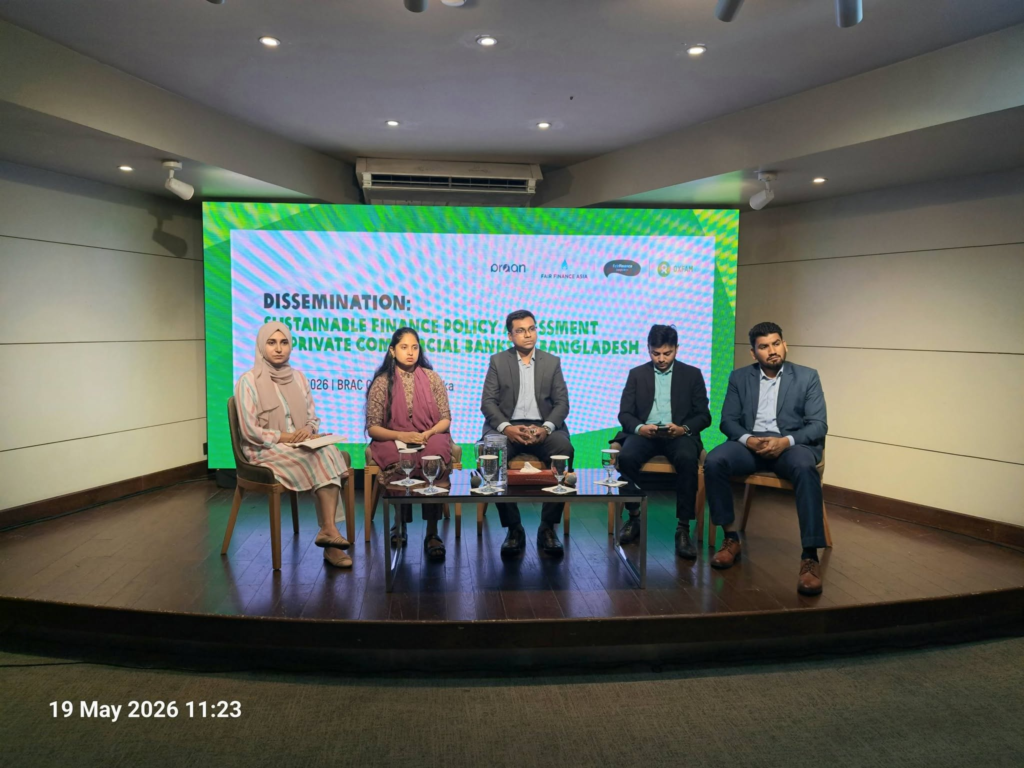
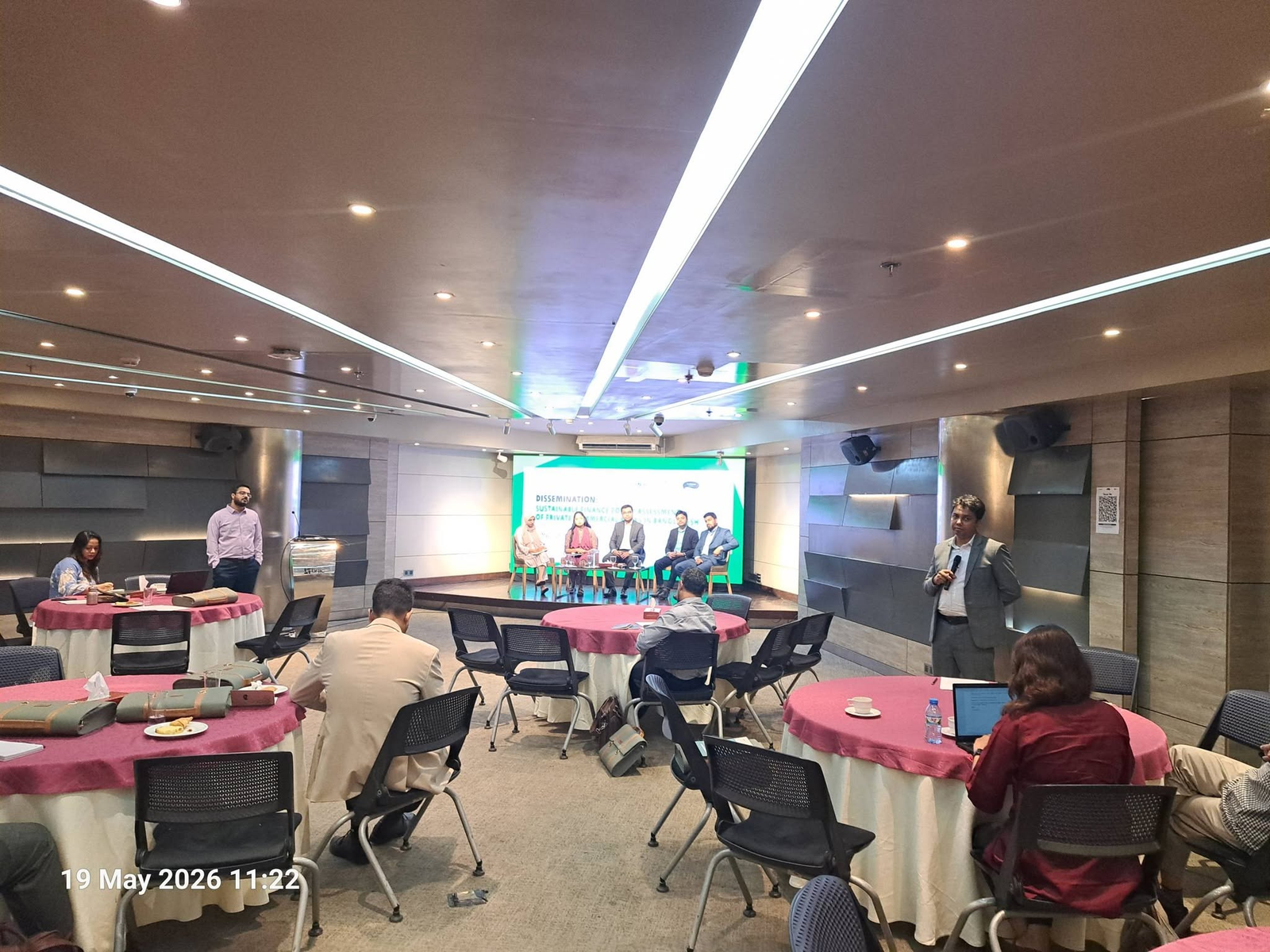
Dhaka, 19 May 2026 Participatory Research & Action Network (PRAAN), with support from Oxfam in Bangladesh, organized the launching event of the report “Sustainable Finance Policy Assessment of Private Commercial Banks in Bangladesh” at BRAC Centre, Mohakhali, Dhaka. The event was organized under the Fair Finance Bangladesh project and brought together more than 50 participants from government, financial institutions, development organizations, civil society, academia, the private sector and the media.
The event created an important platform for dialogue on how Bangladesh’s banking sector can strengthen sustainable finance, environmental, social and governance (ESG) commitments, transparency and accountability.
Assessing Publicly Disclosed ESG Commitments
The assessment reviewed the publicly disclosed ESG policy commitments and disclosure practices of three selected private commercial banks BRAC Bank PLC, City Bank PLC and Eastern Bank PLC. The banks were selected considering their market significance, level of sustainability disclosure and relevance to sustainable finance practices in Bangladesh.
Using the Fair Finance Guide International methodology, the assessment examined eight core ESG themes:
- Biodiversity
- Climate change
- Corruption
- Gender equality
- Human rights
- Labour rights
- Taxation
- Transparency and accountability
The assessment was based on publicly available information, including annual reports, sustainability disclosures, policy documents, official websites and other relevant institutional documents. Importantly, it focused on the quality and scope of publicly disclosed policy commitments rather than transaction-level financing decisions or actual implementation performance.
Bringing Diverse Stakeholders Together
The launching event brought together a wide range of stakeholders, including senior government officials, representatives from Bangladesh Bank and the Bangladesh Financial Intelligence Unit (BFIU), commercial banks and financial institutions, stock exchange leadership, business associations, development partners, UN agencies, embassies, international financial institutions, think tanks, academia, civil society organizations, climate finance experts and media professionals.
This diverse participation reflected the growing importance of sustainable finance not only for the banking industry, but also for Bangladesh’s broader climate resilience, development and accountability agenda.
Key Findings and Policy Discussion
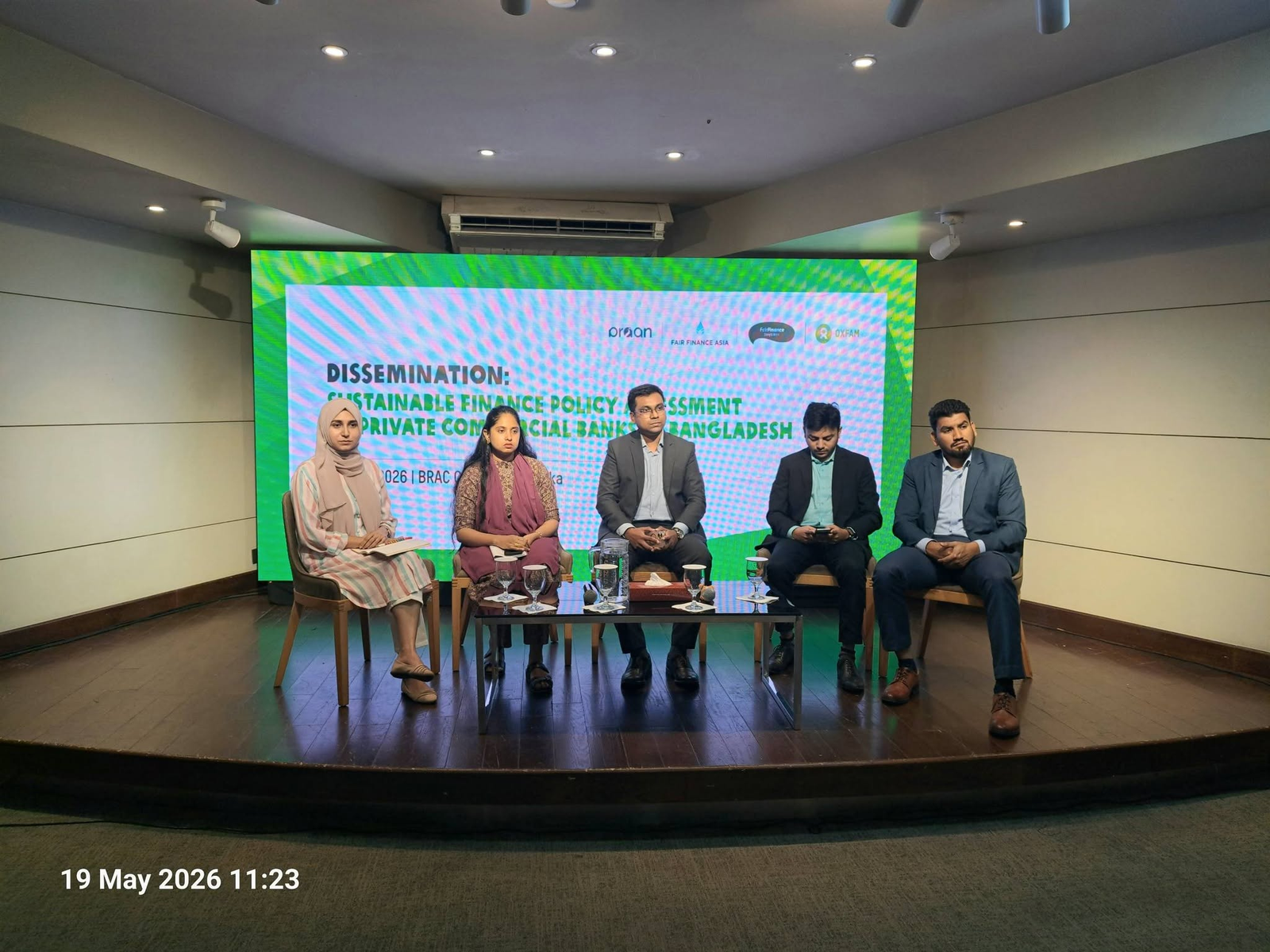
Mr. Saify Iqbal, Climate Policy Coordinator at Oxfam in Bangladesh, delivered the keynote presentation based on the findings of the policy assessment. He presented the purpose, methodology, analytical framework, scoring approach, key findings and recommendations of the study.
The presentation highlighted the increasing importance of ESG integration in the banking sector for strengthening climate resilience, responsible finance, social equity, transparency and accountability.
Participants also discussed Bangladesh Bank’s existing sustainable finance initiatives, including the Green Banking Guidelines, Environmental and Social Risk Management Framework and Sustainable Finance Policy. The discussion highlighted the importance of reflecting Bangladesh’s national regulatory and institutional context more clearly in future assessments.
Building an ESG Framework That Reflects Bangladesh’s Context
Participants provided constructive feedback on the methodology, scoring system, scope and assessment criteria. A key point emerging from the discussion was the need to adapt international standards to the realities of Bangladesh’s banking and financial sector.
Participants emphasized that factors such as the country’s climate vulnerability, local ESG realities, SME financing conditions and regulatory expectations should be taken into consideration.
The discussion also recognized the opportunity for Bangladesh to develop context-specific ESG criteria that respond to national climate risks and development priorities.
While stronger ESG governance is essential, participants noted that implementation should also consider the capacity of local SMEs and other borrowers. A rigid, one-size-fits-all approach could create additional compliance burdens for smaller businesses unless it is accompanied by clear guidance, capacity building and phased implementation.
Banks Welcome Continued Dialogue
Representatives from the assessed banks also participated in the event and welcomed the assessment as an important starting point for dialogue on sustainable finance, transparency and accountability.
They noted that some banks may already have internal sustainable finance policies and procedures that are not publicly disclosed. Representatives expressed interest in sharing the assessment messages with their management and exploring opportunities to improve public disclosure in areas such as taxation, transparency, anti-corruption, sustainability governance and ESG risk management.
The discussion further clarified an important aspect of the assessment: a low score in a particular area does not necessarily mean that a bank has no relevant internal policy or practice. Rather, the scores reflect the availability, quality and scope of publicly disclosed policy commitments.
Advancing Sustainable Finance in Bangladesh
PRAAN and Oxfam in Bangladesh emphasized that the investment and financing decisions of financial institutions have far-reaching implications for society and the economy. Through lending, investment and risk management decisions, financial institutions can significantly influence Bangladesh’s development pathways.
The discussion also drew lessons from the ESG transition of Bangladesh’s ready-made garment sector, where market pressure, regulatory guidance, institutional commitment and public accountability have contributed to change. Building on such experience, Bangladesh’s financial sector has an opportunity to play a stronger role in mainstreaming sustainable finance.
A First Step Towards Deeper Engagement
The event concluded with a shared understanding that the assessment represents a first step towards deeper engagement among regulators, financial institutions, civil society organizations, development partners and the private sector.
The findings and discussions highlighted the need for stronger public disclosure, improved ESG policy integration, clearer accountability mechanisms and greater transparency in sustainable finance practices across Bangladesh’s banking sector.
Through the Fair Finance Bangladesh initiative, PRAAN will continue to contribute to dialogue and engagement around responsible, transparent and sustainable financial practices in Bangladesh.