Dhaka, 21–22 May 2026.
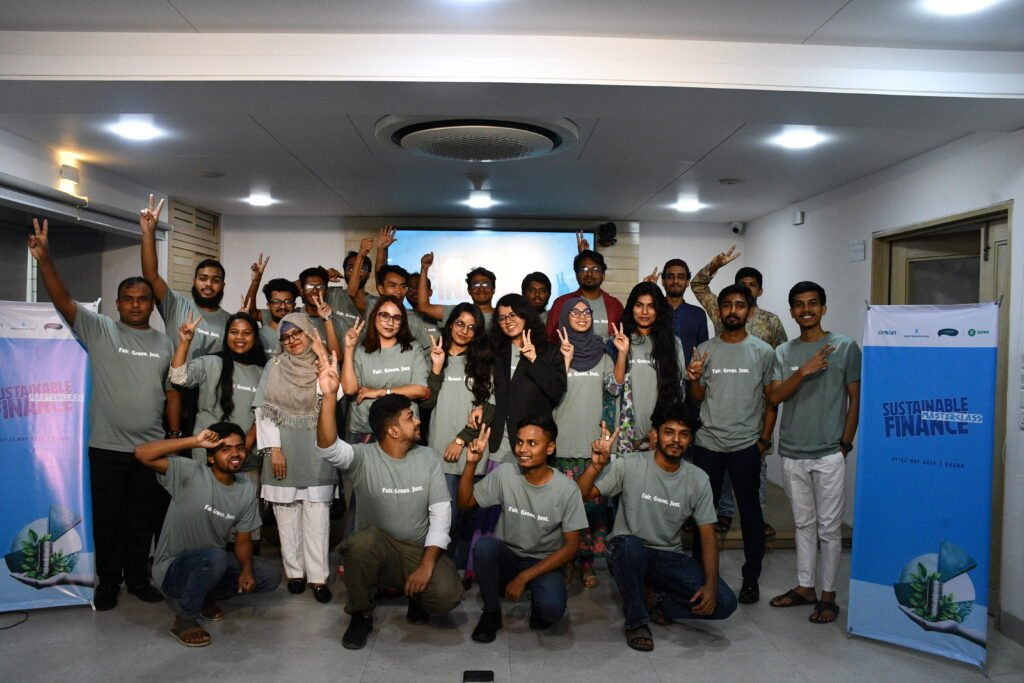
Participatory Research & Action Network (PRAAN), with support from Oxfam in Bangladesh under the Fair Finance Bangladesh Initiative, organized a two-day Sustainable Finance Masterclass in Dhaka to strengthen the capacity of young researchers, activists, journalists and civil society actors to understand sustainable finance, ESG risks and accountability in mega project financing.
The Masterclass brought together 25 participants from across Bangladesh, including seven women and three media professionals. Over two intensive days, participants took part in seven technical sessions, explored two specialized primers and developed 11 research proposals focusing on ESG accountability, mega project financing and human rights impacts.
Why Sustainable Finance Matters
Bangladesh’s financial sector plays a critical role in financing large-scale infrastructure, energy and industrial projects. The way these investments are designed and financed can have significant implications for environmental sustainability, social equity, public finance and community livelihoods.
While Bangladesh has introduced sustainable finance policies, green banking guidelines and environmental and social risk management frameworks, there remains a need for stronger independent scrutiny of how these standards are applied to large-scale projects.
At the same time, young researchers and civil society actors often have limited opportunities to build the technical skills necessary to examine project financing structures, identify ESG and human rights risks and engage financial institutions and regulators through evidence-based advocacy.
The Sustainable Finance Masterclass was designed to begin addressing this gap.
Rather than being a one-time training programme, the initiative aimed to create a pipeline for youth-led evidence generation on responsible finance and human rights-based accountability. Participants were encouraged not only to learn technical concepts, but also to transform those lessons into practical research ideas capable of supporting future advocacy.
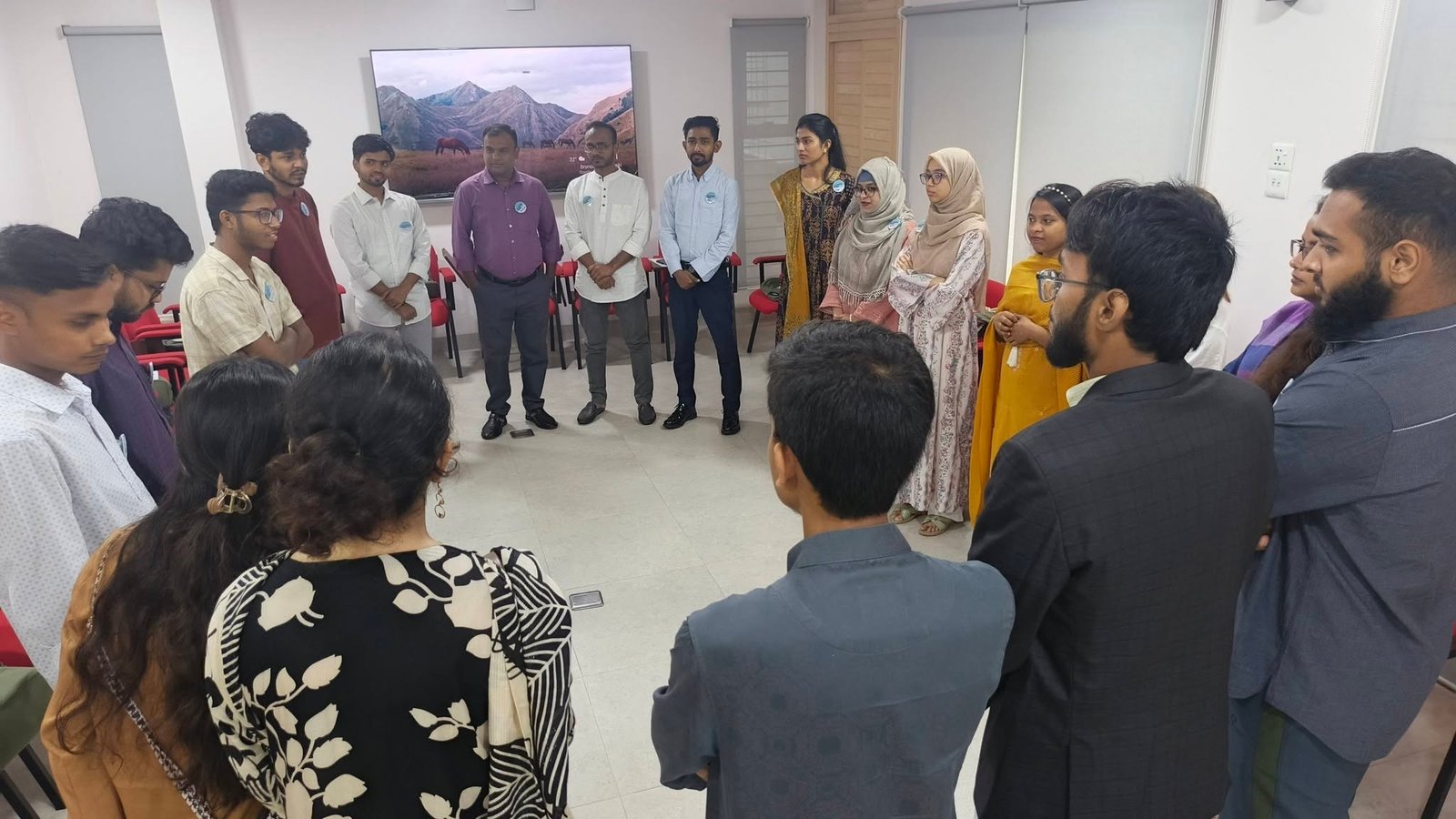
Understanding Bangladesh’s Sustainable Finance and ESG Landscape
The first technical session, “Sustainable Finance & ESG Landscape,” was facilitated by Khondkar Morshed Millat, Faculty Member at the Bangladesh Institute of Bank Management (BIBM) and former Director of the Sustainable Finance Department at Bangladesh Bank.
The session explored the regulatory and structural foundations of sustainable finance and ESG in Bangladesh. Participants discussed how Environmental, Social and Governance considerations are increasingly becoming part of compliance, accountability and financial decision-making.
The discussion also covered Bangladesh Bank’s Sustainable Finance Policy and the relationship between responsible financing, climate-sensitive investment, good governance, employment and long-term economic resilience.
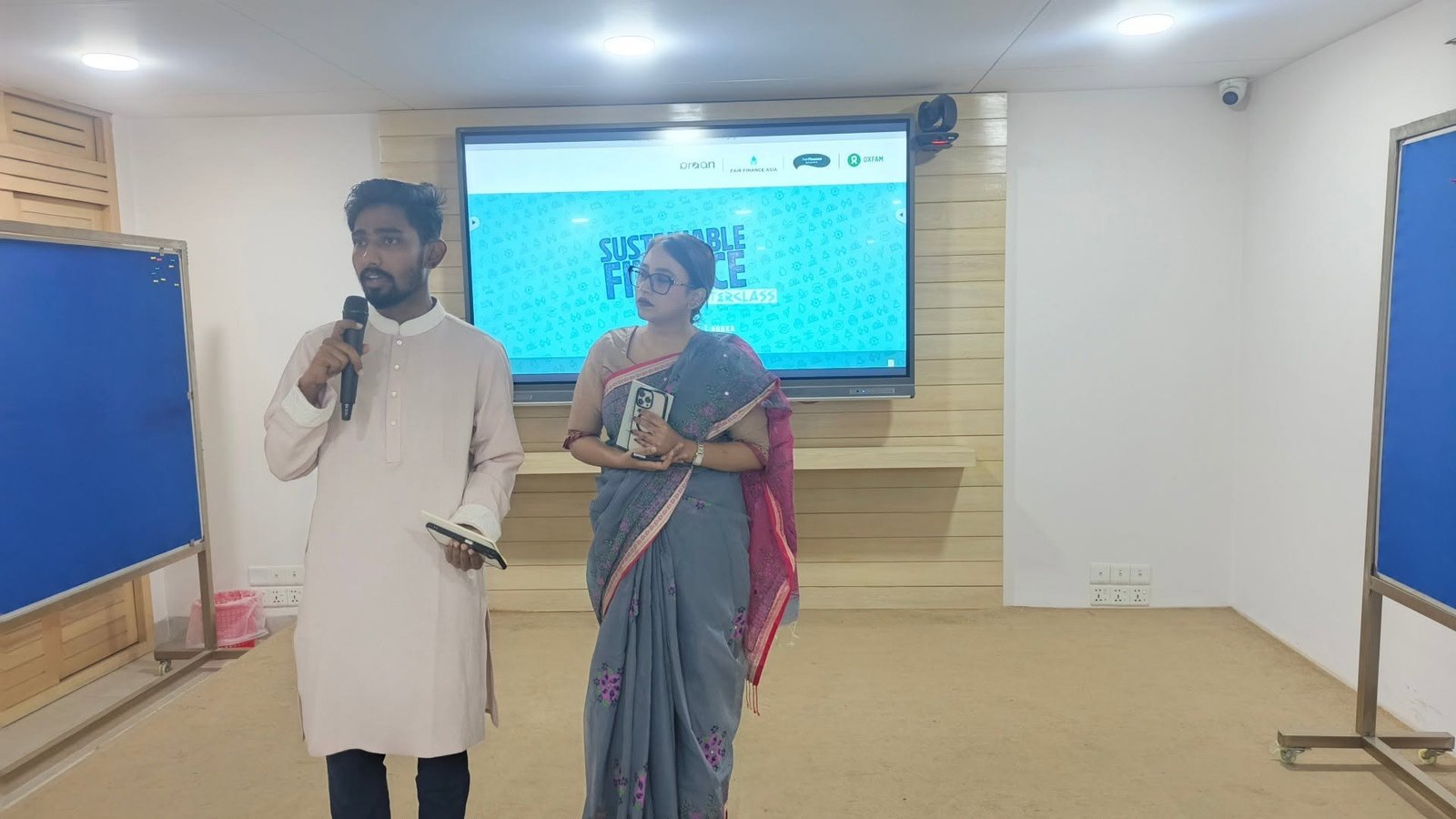
Looking Inside Mega Project Financing
Participants then moved from the broader ESG landscape to the mechanics of financing large infrastructure projects.
Kuntal Roy, Communications Co-Chair of Climate Action Against Disinformation (CAAD) at the Global Strategic Communications Council, facilitated sessions on the Anatomy of Mega Project Financing and a practical Mega Project Financing Analysis Case Lab.
Participants explored how mega projects are financed through instruments and structures including debt, equity, syndicated loans, bilateral financing, multilateral development finance, credit insurance and export credit support.
The sessions also examined how financial institutions assess project sponsors, expected revenues, repayment capacity, land readiness, legal structures and off-taker arrangements before deciding whether a project is bankable.
Crucially, the discussion connected project financing with broader questions of public accountability, climate impacts, land acquisition, community livelihoods, social safeguards and human rights.
The message was clear: mega project financing is not simply about mobilizing capital. It is also about governance, public interest, environmental responsibility and long-term sustainability.

Putting Human Rights at the Centre of Financial Decisions
The Masterclass also examined the relationship between business, finance and human rights through a session facilitated by Dr. Moshahida Sultana, Associate Professor at the Department of Accounting, University of Dhaka.
Participants were encouraged to look beyond financial balance sheets and consider how large-scale projects affect people, livelihoods, labour rights, ecosystems and local communities.
The discussion explored challenges associated with land acquisition, displacement, livelihood losses, compensation, environmental degradation and access to information. It emphasized that financial compensation alone may not adequately restore the livelihoods, social networks or economic security of project-affected communities.
The session highlighted the importance of integrating human rights due diligence, environmental safeguards, transparent disclosure, community consultation and accountability mechanisms into mega project financing decisions.
Learning Through an ESG Due Diligence Simulation
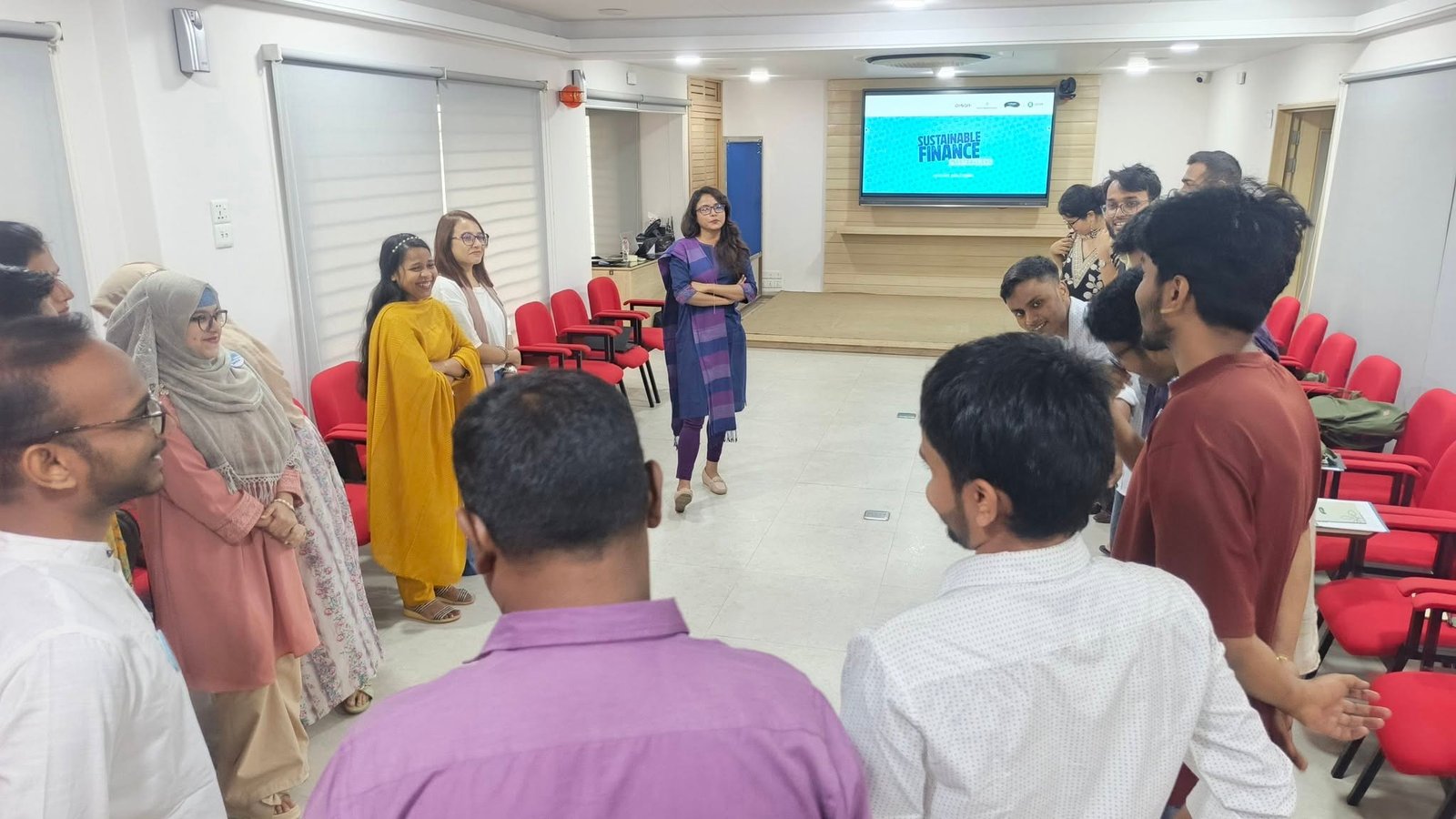
One of the most interactive parts of the programme was an ESG Due Diligence Simulation, where participants took part in a role-play based on a fictional large-scale economic zone project called the Meghna River Industrial Corridor.
Participants assumed the roles of commercial lenders, Bangladesh Bank regulators, civil society representatives, affected community members and project developers.
They were asked to navigate a range of fictional ESG challenges, including displacement, impacts on fishing livelihoods and concerns related to international performance standards. The objective was to negotiate remedial measures and commitments that could bring the project closer to responsible and internationally recognized sustainable finance practices.
The exercise allowed participants to experience how different actors may approach the same project from very different perspectives — and how dialogue, evidence, regulation and accountability can shape financial decisions.
From Primers to a Competitive Sustainability Quiz
Two specialized resources — the Sustainable Finance Primer and Just Energy Transition Primer — were also introduced during the Masterclass.
Participants were divided into two teams, Urban and Periphery, before taking part in a competitive quiz covering national and international sustainability frameworks.
Questions ranged from the Triple Bottom Line, the Paris Agreement and greenwashing to Bangladesh Bank’s Environmental and Social Risk Management guidelines, IFC Performance Standards, sustainable finance lending targets and the importance of a just energy transition.
The Periphery team ultimately won the competition, but the session reflected the collaborative spirit of the Masterclass when the winning team shared its prize with all participants.
Moving from Learning to Research
A defining feature of the Masterclass was its focus on moving participants from technical learning toward independent, evidence-based research.
During the session “From Analysis to Research Design,” participants learned how to formulate specific research problems and questions, identify credible data sources, develop appropriate methodologies and connect research findings with clear advocacy objectives.
The session also examined common weaknesses in advocacy research, including overly broad research scopes, unclear methodologies, unsupported claims and weak connections between evidence and policy decision-making.
This learning was then applied in the Research Proposal Development Lab, mentored by Helen Mashiyat Preoty, Senior Research Associate at the Centre for Policy Dialogue (CPD).
Participants worked individually and in teams to identify projects for further study, map financiers and financial instruments, identify ESG compliance gaps and human rights risks, assess available evidence and information gaps, and develop appropriate research methodologies.
They also considered relevant frameworks, including the UN Guiding Principles on Business and Human Rights, IFC Performance Standards and Bangladesh Bank policies.
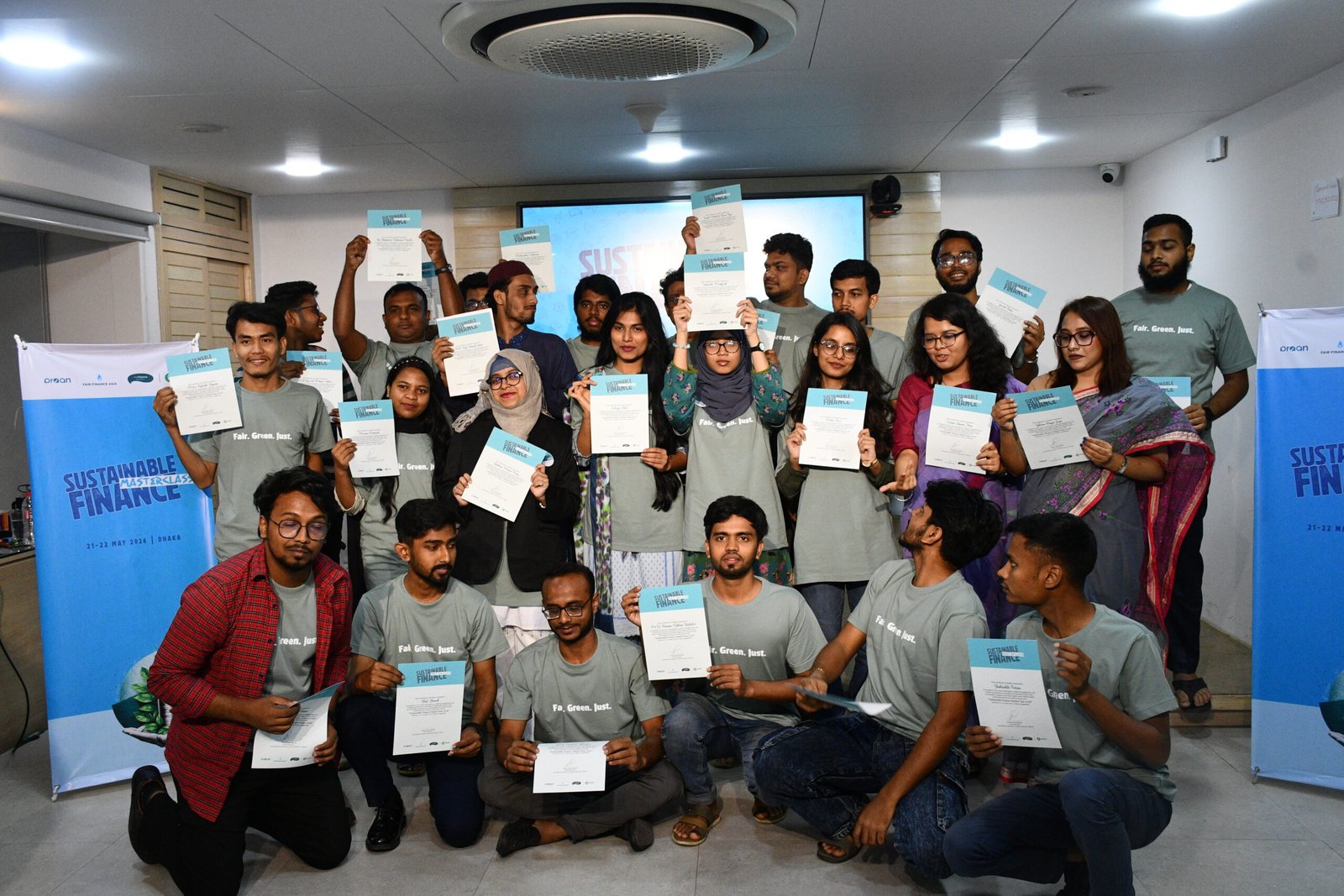
By the end of the programme, the cohort had produced 11 research proposals, creating a foundation for selected ideas to potentially be developed into more detailed studies.
From Training to Continued Engagement
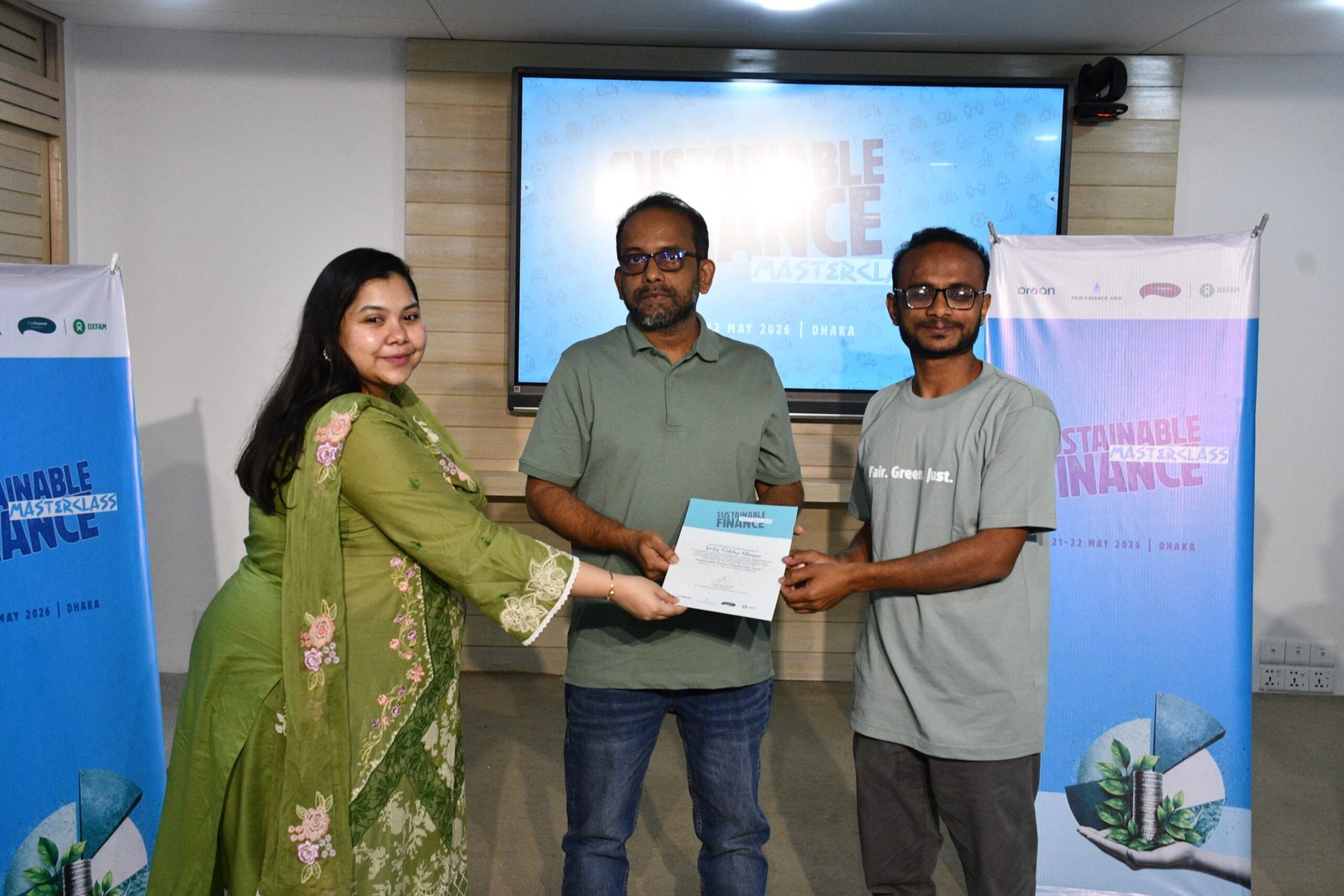
The Masterclass concluded with certificate distribution and reflections from Nurul Alam Masud, Chief Executive of PRAAN, and Helen Mashiyat Preoty of CPD.
The closing discussion emphasized that the Masterclass was intended as the beginning of an ongoing engagement rather than the end of a training programme.
Participants were encouraged to refine the research ideas developed during the programme and remain connected with the Fair Finance Bangladesh network. The organizers emphasized that credible sustainable finance advocacy requires a continuous supply of independent and well-evidenced research — and that young researchers and civil society actors can play an important role in building that evidence base.
Through the Sustainable Finance Masterclass, participants moved from understanding the foundations of sustainable finance and mega project financing to applying ESG and human rights frameworks, questioning accountability gaps and designing research capable of contributing to future advocacy.
The programme demonstrated the potential of investing in young people not simply as participants in discussions on sustainable finance, but as researchers, advocates and accountability actors who can help shape a more responsible and sustainable financial system in Bangladesh.