In the development sector, creating sustainable and measurable social change requires strong strategic planning, robust tracking mechanisms, and evidence-driven decision-making.
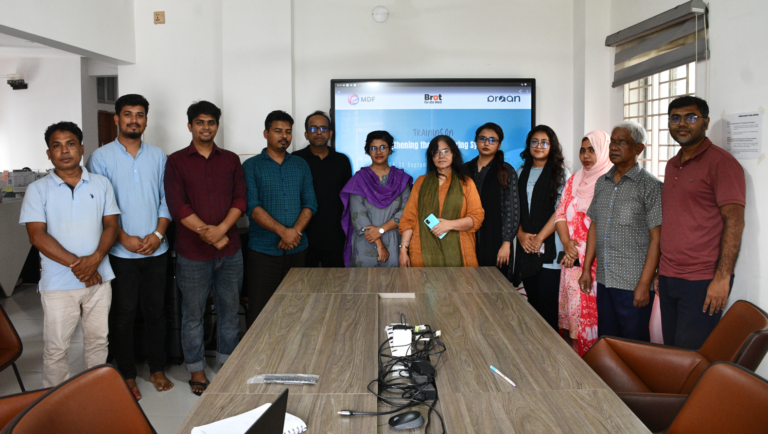
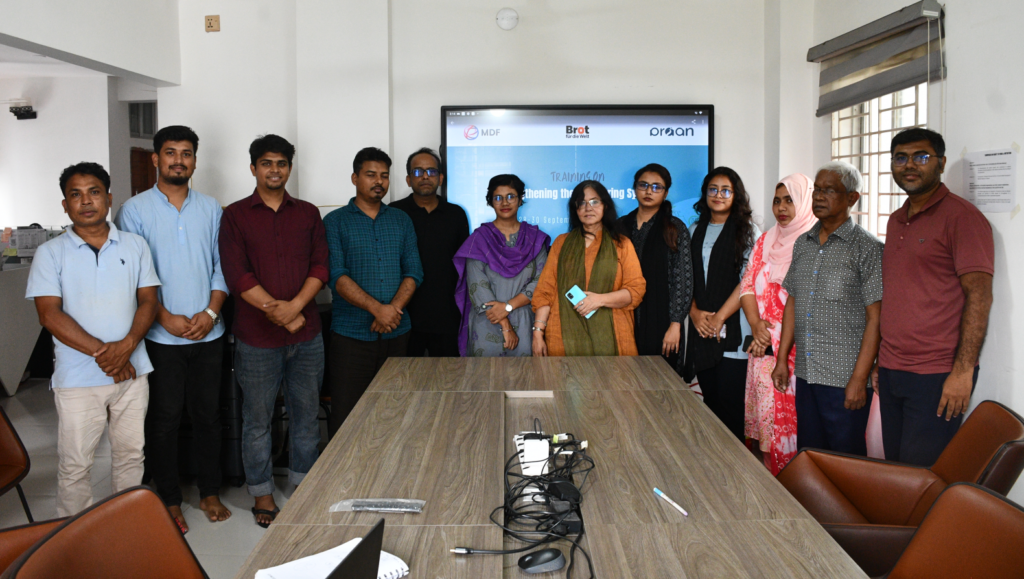
To strengthen these core competencies, a comprehensive three-day capacity development training on “Theory of Change and Programme Monitoring” was successfully organized at the PRAAN (Participatory Research & Action Network) Secretariat in Noakhali.
- Date: 28–30 September 2026
- Conducted by: MDF Training & Consultancy
- Supported by: Bread for the World
- Venue: PRAAN Secretariat, Noakhali
Objectives and Core Focus Areas
The primary goal of the workshop was to enhance the overall effectiveness of development interventions, sharpen outcome measurement systems, and institutionalize evidence-based decision-making across programme lifecycles.
Throughout the intensive three-day sessions, participants engaged in both theoretical learning and practical, hands-on exercises covering essential areas of programme design and evaluation:
- Pathways of Change: Understanding how project activities directly connect to intermediate outcomes and long-term systemic impact.
- Results-Based Management (RBM): Shifting focus from mere activity implementation to achieving tangible, verifiable results.
- Monitoring & Evaluation (M&E) Frameworks: Modern approaches to tracking progress, identifying bottlenecks, and adapting strategies in real time.
- Indicator Development: Formulating precise, measurable, and relevant qualitative and quantitative indicators.
- Data-Driven Programme Management: Leveraging credible data to inform strategic adjustments and demonstrate accountability.
Expert Facilitation and Participatory Methodology
The training was facilitated by Mahbuba Haque Kumkum, Senior Trainer and Consultant at MDF Bangladesh.
Utilizing a research-backed, highly participatory approach, the sessions encouraged active dialogue, group exercises, and contextual case analyses. This interactive methodology enabled participants to:
- Demystify complex planning tools and adapt them to local ground realities.
- Develop a deeper understanding of designing clear pathways of change.
- Apply structured evidence-based frameworks directly into their ongoing and future programme planning.
Driving Sustainable Social Impact
Building internal institutional capacity in monitoring and evaluation is essential for driving long-term transformation.
This training marks a significant step forward in elevating programme quality, reinforcing rigorous M&E systems, and ensuring that development initiatives deliver meaningful, transparent, and lasting social impact for the communities they serve.