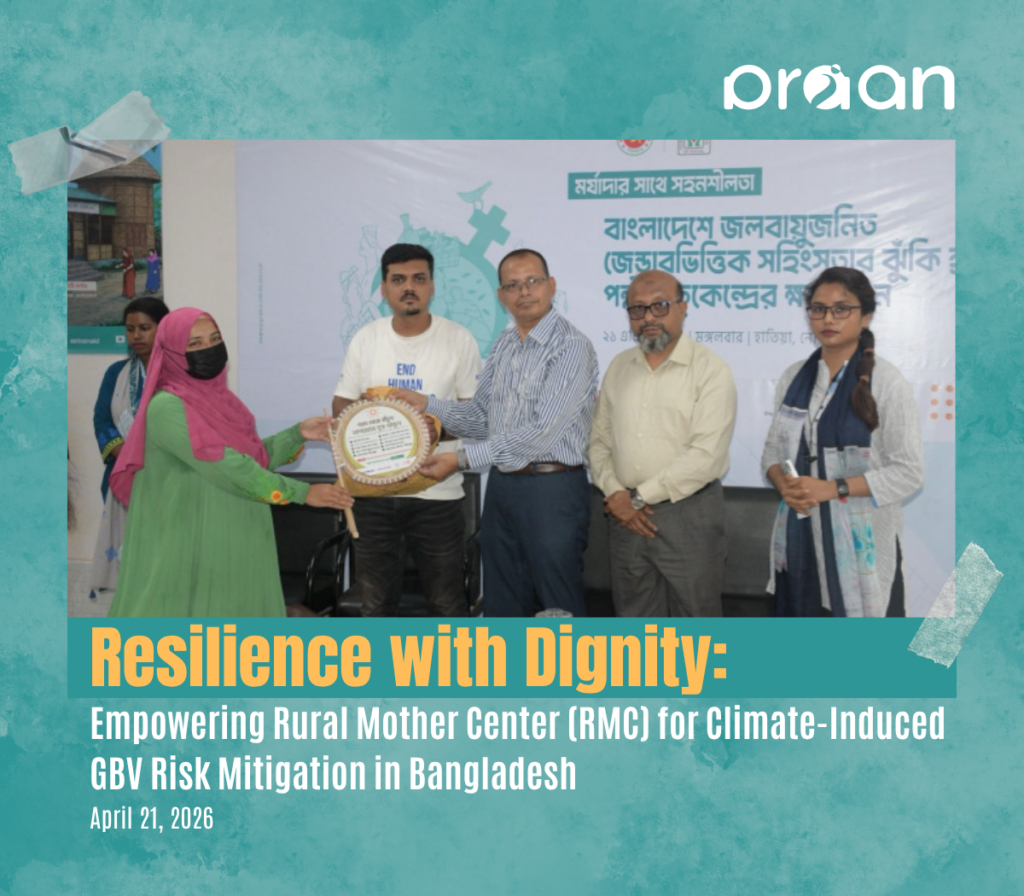
On April 21, 2026, a skills development workshop titled “Resilience with Dignity” took place in Hatiya, Noakhali. The program focused on protecting coastal women from climate induced gender based violence and extreme heat.
Climate change is increasing the frequency and intensity of heatwaves and other hazards across Bangladesh. Women face higher exposure and risk. During heatwaves, many women spend long hours cooking and doing household work in high temperatures. This raises health risks and increases vulnerability to gender based violence.
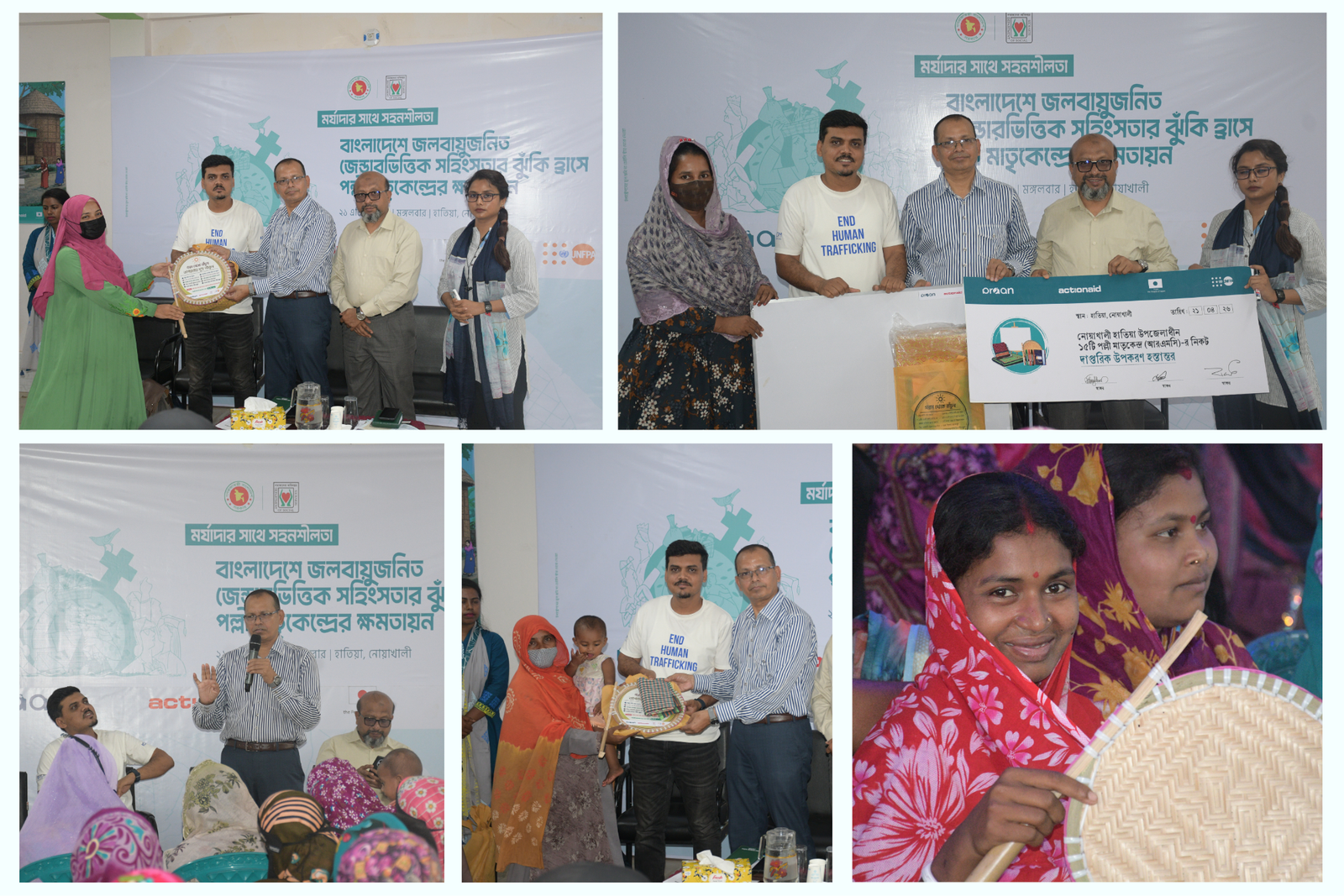
The workshop addressed these challenges with practical guidance. Participants discussed how to reduce heat related health risks and how to respond to violence. Organizers distributed hand fans, towels, and informational leaflets on gender based violence referral pathways.
The program also aimed to strengthen local support systems. Leaders from 15 Rural Mother Centers received essential materials. Each center received a whiteboard, two beds, registers, and basic stationery to improve service delivery.
A total of 100 members from Rural Mother Centers and representatives from the উপজেলা Social Services Office joined the event. The Department of Social Services organized the program in Hatiya. It was supported by the United Nations Population Fund, Participatory Research and Action Network, and ActionAid Bangladesh.
Z. M. Mizanur Rahman Khan, Deputy Director of the District Social Services Office in Noakhali, attended as chief guest. Mohammad Abdur Rahman, Assistant Director for Programs and Social Security, and Shamsad Khan, GBV in Emergencies Officer from UNFPA, joined as special guests. Umme Salma Popy, Program Coordinator at PRAN, facilitated the session.
Speakers highlighted a clear trend. Temperatures are rising across the country, including coastal Hatiya. Women face dual risks. One is health related. The other is exposure to violence. They stressed the need for stronger awareness and effective local service systems.
They shared practical actions participants can apply immediately. Drink enough water. Take regular rest. Wear light and comfortable clothing. Adjust daily work schedules during extreme heat. Learn about GBV referral pathways and seek help quickly when needed.
Organizers expect the distributed materials to strengthen Rural Mother Centers. These centers play a key role in community support. Improved facilities will help expand services, empower women, and prevent violence at the local level.