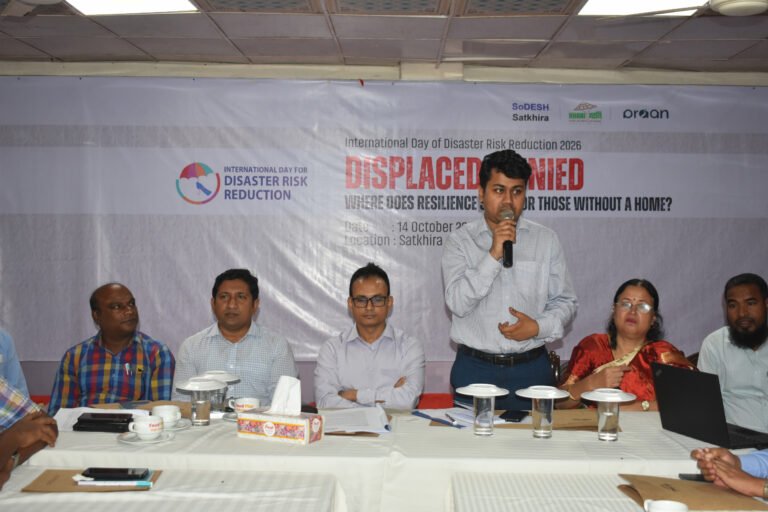
Displaced, Denied: Food insecurity among climate-displaced families in Satkhira
New research reveals the gap between climate commitments and the everyday realities of families living in informal urban settlements in coastal Bangladesh.
Climate displacement does not end when a family reaches safer ground. For many households, the loss of land and livelihoods begins a prolonged struggle to secure sufficient food, safe water, housing and access to public services.
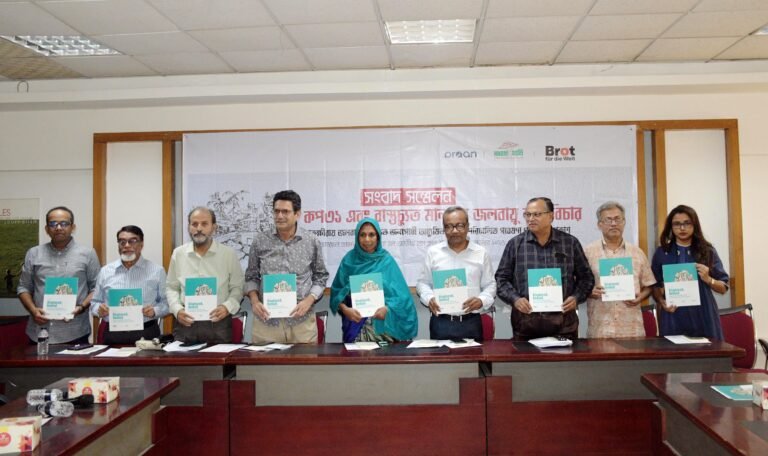
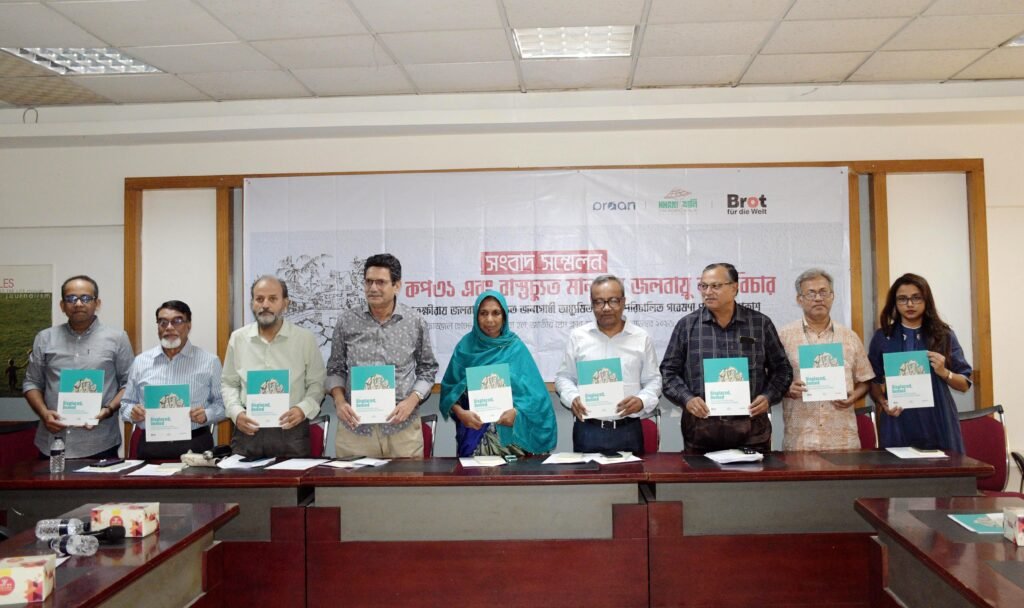
On 3 November 2026, KHANI Bangladesh and the Participatory Research and Action Network (PRAN) launched Displaced, Denied at the National Press Club in Dhaka. Presented ahead of COP31, the study examines food insecurity and the wider rights of climate-displaced households in informal settlements across Satkhira Municipality.
The research draws on a household survey covering 358 households across 35 informal settlements. Its findings underscore an urgent policy challenge: people already affected by climate-related disasters continue to face barriers to food, reliable income, safe drinking water, secure housing and social protection.
Food insecurity is also an access crisis
For the families interviewed, the challenge is not simply whether food is available in local markets. It is whether they can afford it. The survey found that 99.4% cited a lack of money as a barrier to obtaining food, while 57.3% reported selling productive assets or essential household items to meet food needs.
These coping measures leave families less able to recover from future shocks. Limited access to varied and nutritious diets further compounds the risks faced by children and other vulnerable household members.
Water, shelter and services remain insecure
The pressures of displacement extend beyond food. Among households surveyed, 96.9% reported relying at least partly on shallow tube-well water they described as saline or iron-affected. Among families living informally on public land, 59% had experienced eviction or faced the threat of eviction.
Displacement can therefore produce successive layers of exclusion: insecure tenure limits investment in shelter, interrupted schooling affects future opportunities, and administrative hurdles restrict access to entitlements.
From lived experience to policy action
At the press conference, community representative Fatema Khatun described how people displaced by disasters first sought refuge along embankments before moving into informal settlements in Satkhira. Employment opportunities, housing and safe water remain scarce, making daily meals difficult to secure.
The discussion was chaired by Rezaul Karim Siddique, Vice-Chairperson of KHANI Bangladesh, with research findings presented by Umme Salma Popy, Programme Coordinator of PRAN. Speakers called for the realities of displaced communities to be brought into national planning and international climate negotiations.
Climate justice must be measured not only by promises made, but by whether displaced people can access food, safe water, dignified housing and livelihoods.
Editorial summary of the policy message presented at the research launch; not a verbatim speaker quotation.Priorities for COP31 and national action
The report calls for a shift from short-term relief towards rights-based, long-term solutions. Its recommendations focus on coordinated action by public institutions, local government and international climate-finance mechanisms.
- Secure housing and land tenure: ensure appropriate rehabilitation and prevent eviction without resettlement.
- Food, water and social protection: expand affordable food access, nutrition services, safe water and inclusive safety-net coverage.
- Livelihoods and documentation: create work opportunities and make registration, identification and grievance mechanisms accessible after displacement.
- Climate finance with accountability: include displacement in adaptation and loss-and-damage funding, with attention to both economic and non-economic losses.
As COP31 approaches, the central test is whether climate commitments translate into tangible improvements for communities with the least responsibility for global emissions and some of the greatest exposure to climate-related harm.
The survey covered 358 households in 35 of Satkhira Municipality’s 47 identified informal settlements. Household recruitment was non-probability-based, using snowball methods. Percentages describe the surveyed households only; they should not be treated as municipality-wide representative estimates.
Press & Publications / Outreach
Demo only — these newspaper names and homepage links do not confirm publication of this research. Replace each sample link with the corresponding published article URL before presenting it as media coverage. Newspaper icons are site favicons.