Day One | 13 December 2025 | Dhaka
Bangladesh’s coast is not merely a frontline of disasters—it is a foundation of the country’s food security, natural resources, livelihoods and economic future.
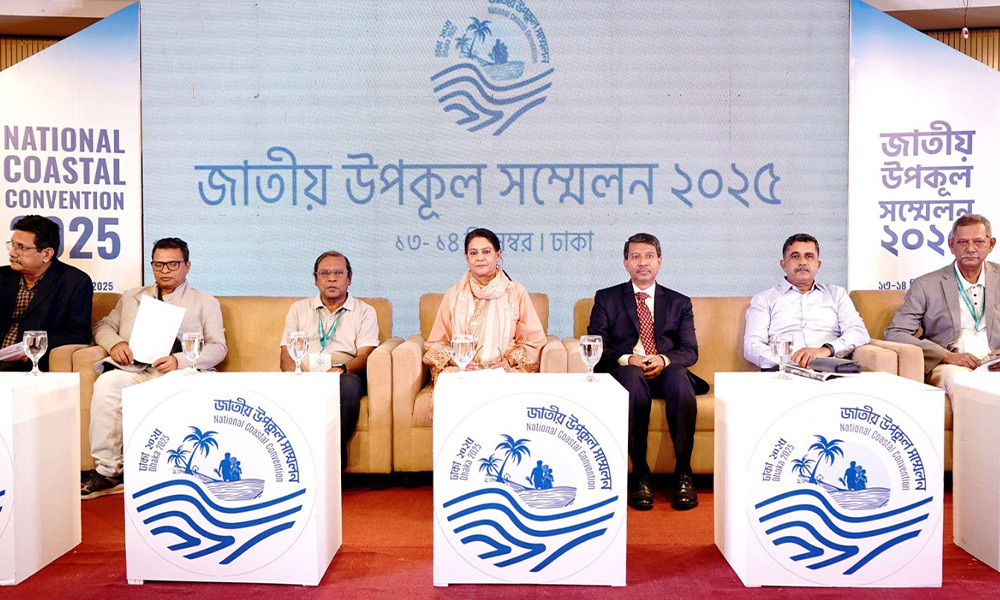
With this broader vision, the National Coastal Conference 2025 opened in Dhaka on 13 December, bringing together policymakers, researchers, development practitioners, civil-society leaders and representatives of coastal communities to place the challenges and possibilities of Bangladesh’s coast firmly on the national agenda.
Held at the Bangladesh Military Museum Auditorium in Bijoy Sarani, the two-day conference brought together more than 300 participants connected to agriculture, fisheries, environment, food security, informal labour, disaster management and community development across Bangladesh’s 19 coastal districts.
A Strong Opening Message: Protect Nature to Protect the Coast
The central message of the opening day was clear: the future of coastal Bangladesh depends on protecting its natural resources and agricultural land while making development more coordinated, inclusive and climate-resilient.
Speaking as the Chief Guest, Syeda Rizwana Hasan, Adviser for Environment, Forest and Climate Change, Water Resources, and Information and Broadcasting, warned that the problems facing coastal areas are becoming increasingly complex.
She highlighted the continuing loss of natural resources and agricultural land, growing threats to food security, increasing poverty and freshwater shortages, alongside emerging challenges such as climate displacement, microplastic pollution and declining carbon absorption capacity. Media coverage of the opening day widely highlighted her call for both short- and medium-term targets backed by forward-looking decisions.
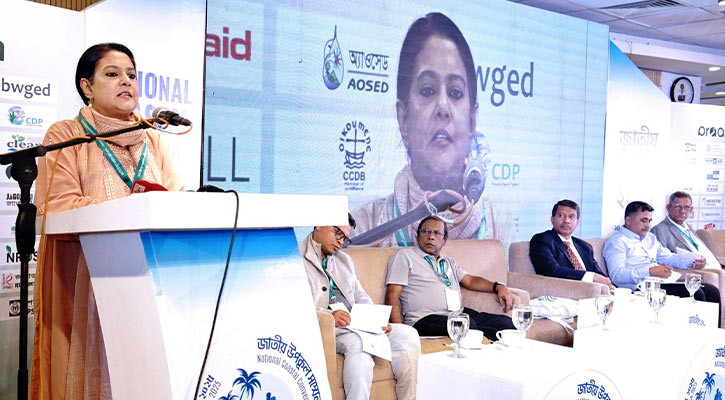
Protecting coastal people requires protecting the ecosystems, land and resources on which their lives depend.
Her message placed forests and agriculture not at the margins of climate policy, but at the centre of Bangladesh’s coastal survival strategy.
Development Cannot Come at the Cost of Livelihoods
Another major issue raised on the first day was the impact of poorly planned development and uncontrolled tourism on coastal communities.
Referring to areas including Saint Martin’s Island, Syeda Rizwana Hasan drew attention to tourism infrastructure, restrictions affecting local transport and the loss of income among people whose livelihoods depend directly on natural resources.
She stressed the need to create alternative livelihood opportunities for affected communities rather than asking them to bear the cost of environmental protection or policy changes alone. Initiatives involving organisations including COAST and BRAC, with possible support from the Ministry of Agriculture, were also mentioned in this context.
This reflects an important principle for coastal development:
Conservation will only be sustainable when local people are part of the solution and have secure alternatives for their livelihoods.
A Coastal Crisis That Demands an Integrated Response
Day One also reinforced that coastal problems cannot be addressed through isolated projects.
Water management affects agriculture. River systems affect salinity. Salinity affects food production and public health. Livelihood loss contributes to displacement. Environmental degradation intensifies disaster risks.
The conference therefore called for an approach that connects water resources, rivers, agriculture, transport, ecosystems, livelihoods and climate adaptation within a unified coastal management framework.
Syeda Rizwana Hasan emphasised that, given the scale of climate risks facing the coastal population, Bangladesh needs a strong and dedicated institutional framework for coastal zone management rather than fragmented responses from individual sectors.
The conference report similarly identifies six interconnected areas at the heart of the discussion: climate resilience, natural-resource management, social protection, just transition, disaster preparedness and good governance.
Bringing Coastal Voices into National Policymaking
The opening session was chaired by Gawher Nayeem Warra, Convener of the National Coastal Conference, while Nurul Alam Masud, Chief Executive of PRAAN, moderated the proceedings.
Among those participating as distinguished guests were:
- Dr. Mohammad Emdad Ullah Mian, Secretary, Ministry of Agriculture
- Md. Enayet Ullah, Director General, Bangladesh Water Development Board
- Md. Jahidul Kabir, Deputy Chief Conservator of Forests
- Deepak Elmer, Deputy Head of Mission, Embassy of Switzerland in Dhaka
- Rezaul Karim Chowdhury, Executive Director, COAST Trust
Their participation reflected one of the conference’s defining ambitions: creating a space where government, civil society, researchers and coastal communities can engage in the same policy conversation.
But the most important voices in the conference were not confined to institutions.
Representatives from coastal districts—including farmers, fishers, women, informal workers, researchers, students and people directly affected by environmental and climate-related crises—brought lived experience into discussions that are too often dominated by technical or administrative perspectives.
From Vulnerability to Rights and Resilience
The discussions on Day One repeatedly challenged the idea that coastal Bangladesh should be viewed only as a region waiting for disaster relief.
The opening policy dialogue called for coastal communities to be recognised as rights-holders and active partners in development.
Issues ranging from freshwater scarcity and saline agriculture to women’s economic security, climate finance, environmental impact assessment and community-based disaster resilience were brought into the conversation.
The conference report records calls for a dedicated coastal agricultural policy, restoration of canals and freshwater systems, investment in salt-tolerant crops, stronger accountability in climate finance and greater recognition of women working in agriculture and fisheries.
It also highlighted the need for transparent environmental assessments and integrated land-use planning before major development projects are undertaken in ecologically sensitive coastal areas.
More Than an Environmental Agenda
Perhaps the most important lesson from the opening day was that coastal protection should not be treated only as an environmental issue.
It is also about food security, public health, economic stability, migration, social justice, women’s rights, employment and national resilience.
Bangladesh cannot pursue sustainable development while millions of people living along its coast remain exposed to worsening water insecurity, livelihood loss, ecological degradation and climate-induced displacement.
That is why the National Coastal Conference 2025 began with an important shift in perspective:
The coast is not a peripheral concern. It is a national priority.
Day One brought policymakers and communities into the same conversation and raised difficult questions about how Bangladesh manages its land, water, forests, agriculture and development investments.
The challenge now is to transform those conversations into policy.
The conference has opened a national dialogue. The next step is to ensure that coastal people remain at the centre of it.