
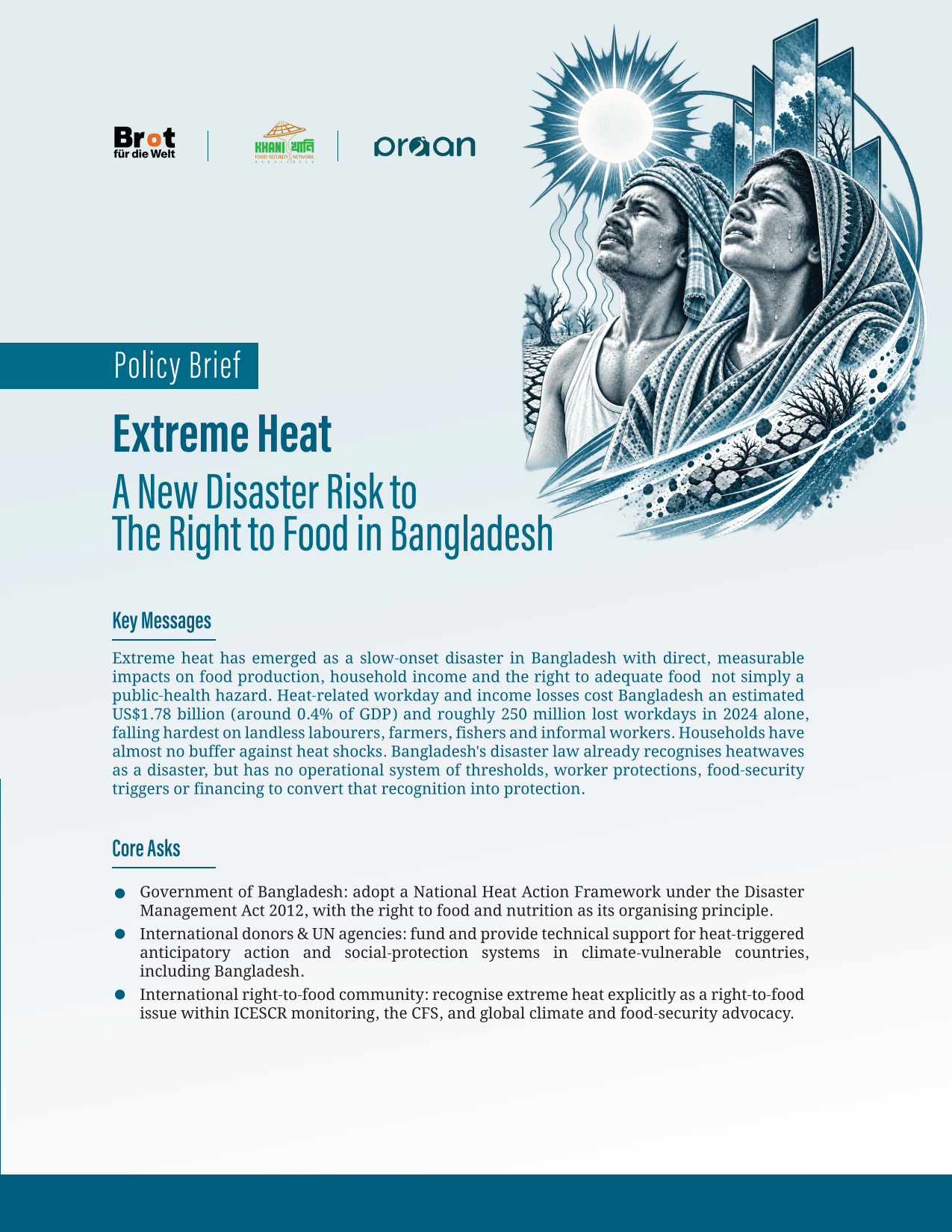

Bangladesh has developed significant capacity to manage rapid-onset disasters such as cyclones and floods. However, the country remains comparatively unprepared for the escalating slow-onset disaster of extreme heat.
Farmers, agricultural labourers, fishers, rickshaw pullers, construction workers, street vendors and other informal workers are losing safe working hours and income because of dangerous heat. At the same time, crops, livestock and fisheries are increasingly exposed to heat stress.
The result is a combined crisis: food production declines while vulnerable households lose the income they need to buy food. Extreme heat therefore threatens food availability, affordability, safe consumption and long-term food security.
Workdays lost to heat in 2024
Estimated economic cost in 2024
Rice damaged by the 2021 heat shock
How Extreme Heat Undermines the Right to Food
Food availability
Extreme heat dries soils, increases irrigation demand and exposes rice, vegetables and fruit to damaging heat stress. Warmer, oxygen-depleted water threatens fish survival, while livestock and poultry production also suffer. Inadequate cold storage and unreliable electricity further increase the spoilage of perishable and nutritious foods.
Economic access to food
Dangerous heat reduces working hours, productivity and daily earnings, particularly for outdoor and informal workers. For landless agricultural labourers and low-income families, even one lost working day can make it difficult to purchase adequate food.
Food utilisation and nutrition
Dehydration, heat exhaustion and illness make food preparation and safe storage more difficult. When household income falls, families may reduce meal sizes, borrow money or stop purchasing protein-rich and nutrient-dense foods. This increases the risk of malnutrition.
Stability of food security
Repeated heat shocks disrupt production and labour calendars, increase food-price volatility, exhaust household savings and deepen debt. Children, pregnant and breastfeeding women, older people, people with disabilities and people with chronic illnesses face particularly severe risks.
Women Face Disproportionate Risks
Women play essential roles in farming, livestock rearing, post-harvest processing, cooking and household food management. Yet they often have less access to irrigation, credit, agricultural advice, secure land tenure and disaster-related decision-making.
Evidence presented in the policy brief shows that female-headed households lose an average of 8% more income to heat stress than male-headed households. Heat exposure during pregnancy is also associated with increased risks of preterm birth, hypertensive disorders, stillbirth and other adverse birth outcomes.
For breastfeeding women, extreme heat increases the risk of dehydration and may affect milk supply, directly threatening infant nutrition at one of the most vulnerable stages of life.
Legal Recognition Exists, but an Operational System Does Not
Bangladesh’s Disaster Management Act 2012 expressly recognises heatwaves as a disaster. The Standing Orders on Disaster 2019 also assign relevant responsibilities to the Bangladesh Meteorological Department and the Ministries of Food, Agriculture, and Labour and Employment.
However, Bangladesh still lacks location-specific heat-index thresholds, colour-coded alerts, mandatory workplace protections, heat-triggered food and income assistance, clear institutional responsibilities and dedicated financing.
The central policy gap is therefore operational rather than legal. Recognition of heatwaves as a disaster has not yet been translated into practical protection for the people most at risk.
Key Recommendations
- Adopt a National Heat Action Framework with the right to food and nutrition as its organising principle.
- Establish location-specific heat-index thresholds and clear, colour-coded early warnings.
- Deliver warnings and practical advice directly to farmers, workers, transport unions and informal settlements.
- Introduce mandatory heat-safe work standards, including access to water, shade, rest and cooler working hours.
- Create temperature-triggered social protection that automatically provides time-bound cash or food assistance when severe heat disrupts daily earnings.
- Establish early-action protocols to protect crops, livestock and fisheries from heat stress.
- Create agricultural insurance and recovery funds for heatwave-induced crop losses.
- Include heatwave risks in local disaster management plans and budgets.
- Establish accessible cooling spaces, safe drinking water and emergency health-referral systems in high-density labour centres.
- Ensure the meaningful participation of women, people with disabilities and other vulnerable groups in heat-related planning and decision-making.
Why Action Is Needed Now
Bangladesh does not need to start from zero. Existing laws, institutions and experience in disaster management provide a strong foundation for developing a heat-specific and rights-based protection system.
Localised early warning, climate-resilient agriculture, safe working conditions, food-market protection, social protection and timely income assistance must be brought together within a coordinated national framework.
Extreme heat is no longer simply an environmental or public health issue. It is a matter of social justice, labour rights, livelihoods, and the right to food and nutrition.
Read the Full Policy Brief
Download the complete publication for detailed evidence, legal analysis and policy recommendations.
Published by: Participatory Research & Action Network-PRAAN
Publication date: September 2026
its a very truth information.