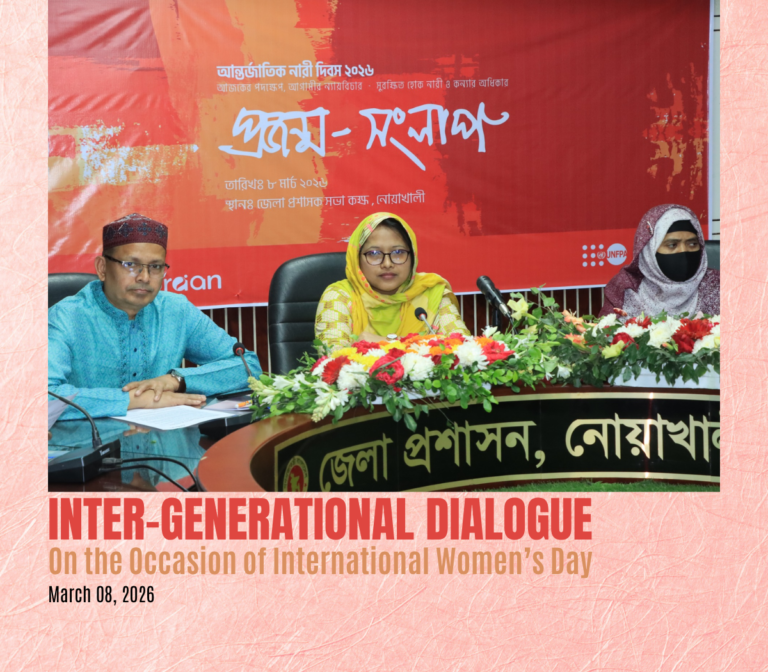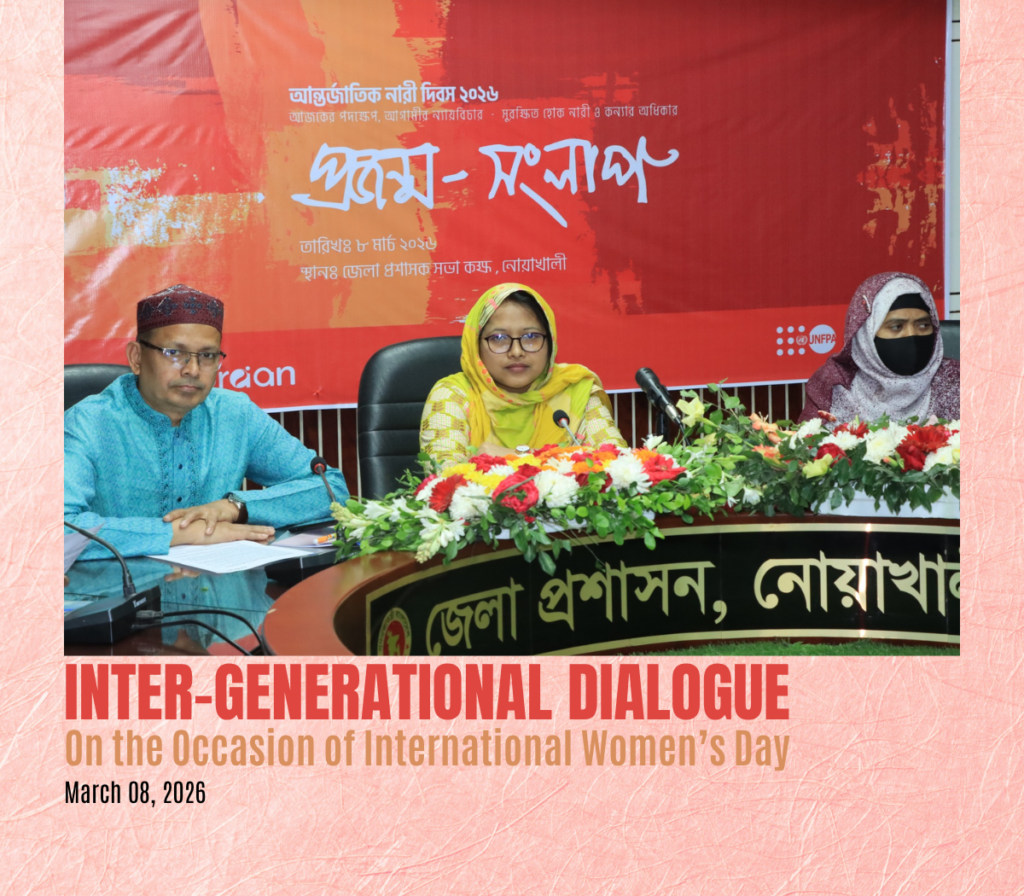
On the occasion of International Women’s Day, as part of its countrywide initiatives, PRAAN organized an Inter-generational Dialogue on 8 March 2026 at the DC Conference Hall, Noakhali. More than 60 participants joined the dialogue, including representatives from gender-diverse communities, young people, senior citizens, NGO representatives, women-led organizations, activists, and farmers’ organizations.
The dialogue aimed to foster constructive conversations among different generations and strengthen mutual understanding, respect, and shared responsibility in society. Such engagement is important for advancing women’s rights and gender equality.
The Additional District Magistrate, Ms. Taslimun Nesa, attended the event as the Chief Guest. Among the distinguished participants were Deputy Director of the Department of Social Welfare, Z. M. Mijanur Rahman Khan, Civil Surgeon of Noakhali, Dr. Mariam Sheme, and Deputy Director of the Department of Women Affairs, Ms. Kamrun Naher.
During the discussion, speakers from diverse backgrounds shared their experiences and concerns regarding violence, discrimination, and structural barriers faced by women and gender-diverse communities. Kotha Islam Zara, representing the gender-diverse community, said that many among them face violence but often lack effective avenues for remedy, as well as opportunities for skill development and employment. Rowshan Akter Lucky, representative of women-led organization and Women Rights Activist highlighted the continued insecurity faced by women and girls in schools and workplaces and urged stronger administrative action. Mrittika, a student from Noakhali Science & Technology University pointed out that women are often viewed only through a gender lens rather than as individuals, which sometimes discourages collaboration when women approach institutions for partnerships.
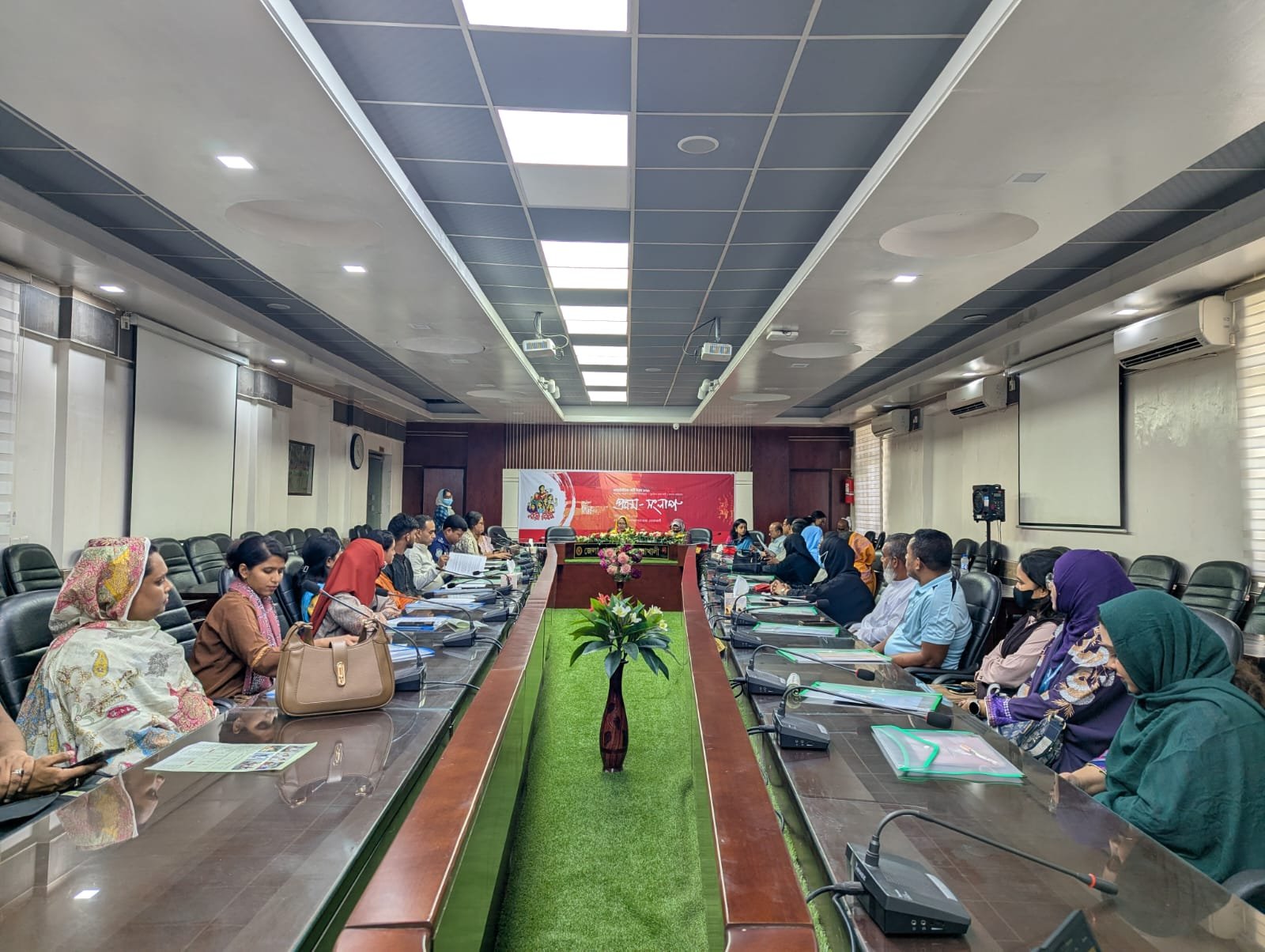
Speakers also emphasized broader structural challenges. Dr. Maryam Simi noted that girls are often deprived of their rightful property inheritance and that many victims of violence seek help only after reaching hospitals. Deputy Director of Department of Social Affairs Mr. Z. M. Mijanur Rahman Khan observed that although Bangladesh has many laws to address violence, their implementation remains weak. He added that many vulnerabilities originate within families and that gender-diverse people often face greater challenges. Ms. Kamrun Naher, Deputy Director of the Department of Women Affairs, said that patterns of violence are often influenced by family background and social conditioning, and emphasized the importance of building awareness and values within families.
In her remarks, Chief Guest Additional District Magistrate Ms. Taslimun Nesa said that women are now in a stronger position in terms of education and are demonstrating their talent and skills. She noted that when women establish themselves in strong positions in society, they can better protect themselves and their families from violence. She also mentioned that various government support programs and free legal aid services already exist, and that coordination with organizations working in these areas can help ensure that support reaches those who need it.
Dr. Sadia Samrin Hridi, Field Monitoring Officer at UNFPA, moderated the dialogue, while Ms. Parvin Sultana Kolly, Project Coordinator of PRAAN, delivered the keynote address. The dialogue concluded with a shared commitment from participants across generations and professions to work together to build a more just and inclusive society for all women and girls.