
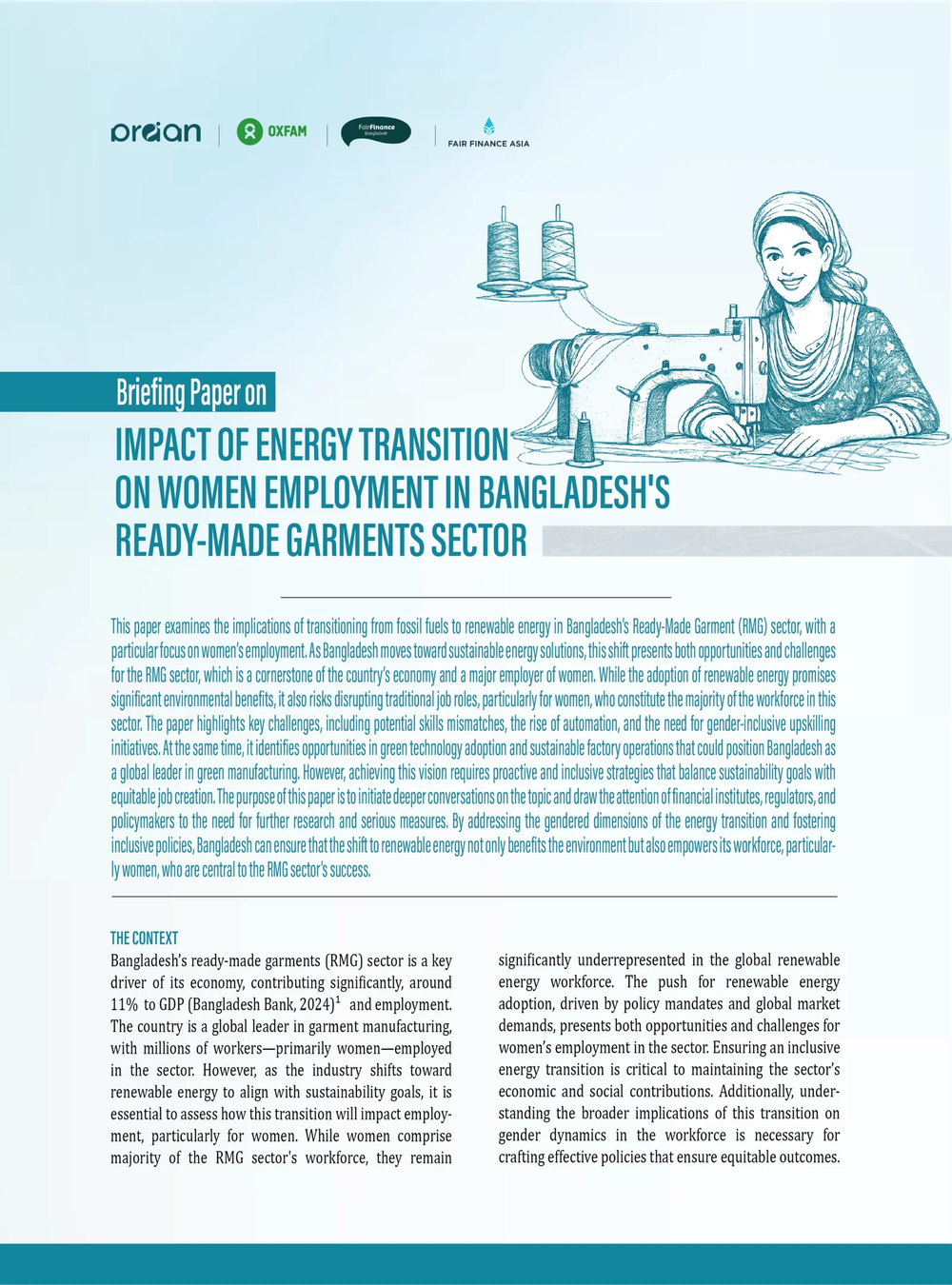
The paper examines how the shift from fossil fuels to renewable energy in Bangladesh’s ready-made garments (RMG) sector will affect women’s employment. The RMG sector is a major pillar of the economy, contributing about 11 percent to GDP and over 80 percent of exports, with women making up the majority of the workforce. However, the sector relies heavily on fossil fuels and is under pressure from global buyers and national policies to adopt cleaner energy.
The transition creates both risks and opportunities. On the risk side, automation and new technologies linked to energy transition may reduce demand for labor-intensive jobs, where most women are employed. Studies show workforce reductions of over 30 percent in some areas, with higher job losses in cutting and sewing roles. Women also face barriers such as limited access to technical training and underrepresentation in renewable energy jobs, which increases the risk of widening gender inequality.
At the same time, the transition opens new opportunities. Renewable energy systems will create jobs in installation, maintenance, and management. Green factories can improve working conditions, job stability, and wages. However, women can only benefit if they gain the right technical skills and access to these roles. Targeted training, inclusive hiring, and supportive policies are critical to ensure women are not left behind.
The paper concludes that a just and inclusive energy transition is essential. Strong policy action, financial incentives for green investment, and large-scale upskilling of women workers are needed. Without this, the transition may deepen inequality. With the right approach, it can strengthen both sustainability and women’s economic empowerment in Bangladesh.